- Home
- Tone
What is Tone in Art?
- Create a focal point
- Create a particular mood or atmosphere
- Suggest depth or distance
- Create the illusion of form
What is tone in art? Put simply, it's all about lights and darks - if you want to improve your art it can make all the difference between a lack-lustre work or one that really grabs the viewer!
How is that done? By using the element of tone to:
Take a look at the artists' work below - see how they've used tone in different ways to get their ideas across.
Which one appeals to you the most? How about using the same technique in your own work?
Create a Focal Point
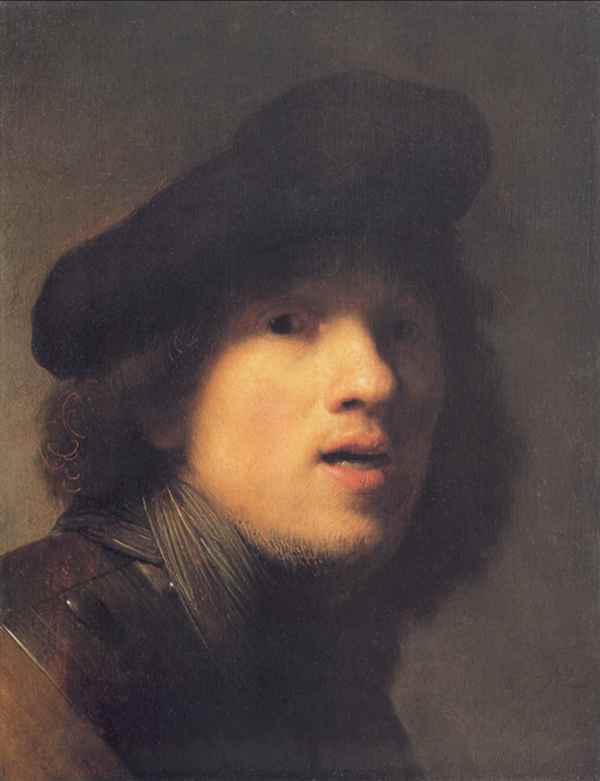 "Self-portrait with Gorget and Beret" Rembrandt 1629
Rembrandt! Master of tone and chiaroscuro (contrast of light and shadow) and in my view, the best painter in Western art!
Well, you may have your favorites, but there's no question where Rembrandt wants us to look in this self portrait is there? Almost everything is in shadow except that face which of course, is the focal point.
Also we see how, just with two tiny dots and a stroke of light, he brings our attention to a secondary focal point - the metal gorget he's wearing (a military throat protector) as a theatrical prop.
And did you see the highlight on the tooth? Not so much a focal point but another tiny detail. It's as if he's captured himself in that one moment - and is looking at us from down the centuries right now!
 "One of the Family" Frederick George Cotman 1880
This sunlit interior obeys the same principle - light against dark or sometimes dark against light - here describing a family meal on a sunny day.
We can see many areas where contrasting tone brings our attention to the details.
But the main focus of the painting, and whole point of it's title, is the white horse and the mother leaning towards it.
And to make the horse and mother stand out from everything else that's going on at the table, the artist has framed their very light tones in a large area of very dark.
(In fact, that area is so dark, you might miss the figure of Father in the corner going off to do some ploughing!)
Works well, don't you think?!
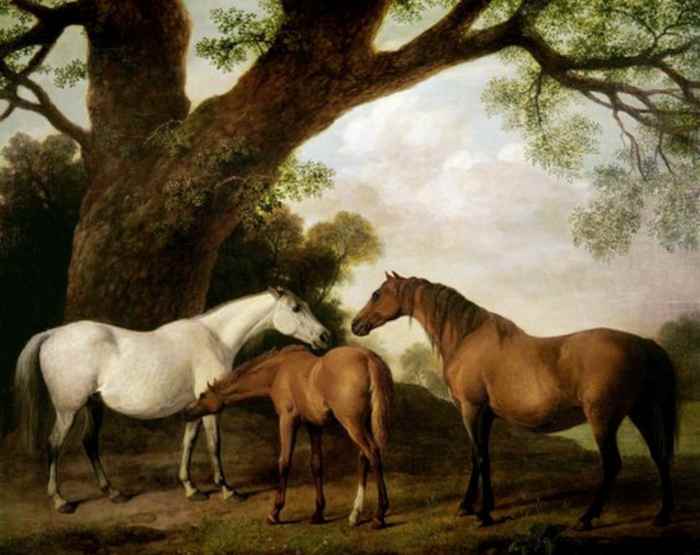 "Two Shafto Mares and a Foal" George Stubbs 1774
Well, I don't know much about horses, but I know that my eyes went immediately to the white one surrounded by dark tones - and then to the bay standing out against the light sky. How about you?
So there are two main focal points here, one slightly more predominant than the other.
George Stubbs knew how to show off those beautiful horses in the best possible way, didn't he? The owners must have been well-pleased!
Create Mood or Atmosphere
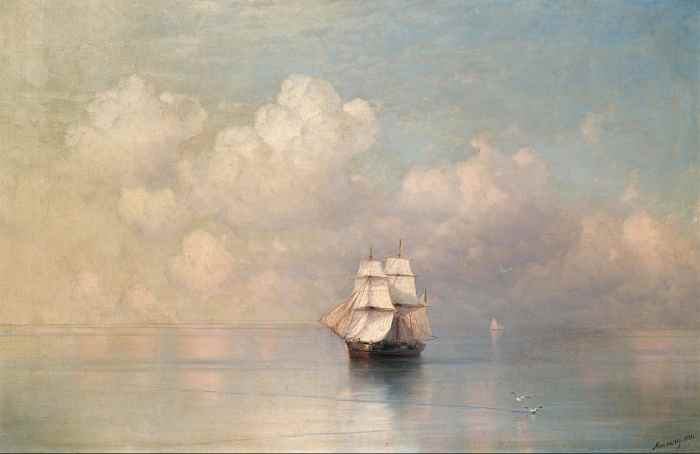 "Calm Seas" Ivan Aivazovsky 19th cent
What a feeling of peace is conveyed by this painting! How does the artist do that?
Yes, we see that the water is calm of course, but the secret is, except for the hull of the ship, he uses entirely muted tones and colors.
In fact the small, dark tone of the ship only seems to emphasise the calm of the day, with just a breath of wind filling the sails. Beautiful!
 "City at Night" Aleksandra Ekster 1919
But maybe you're in the mood for something livelier? How about a night on the town?!
This abstract conveys a very different mood with its bright colors and jagged shapes suggesting noise, lights and crowded streets.
The bright, light tones stand out due to their being surrounded by very dark tones.
So it's the same simple technique, the artist playing with lights and darks, but this time conveying a different mood altogether.
 "Night Shadows" Edward Hopper 1921
Oo, a bit creepy, this one! We're high up, watching a lone figure as he is about to cross the looming shadow of a street lamp.
Everything feels very quiet - too quiet. Is that a saloon on the corner? If it is, they shut hours ago - no welcoming light there for him now.
Will he cross that dark line? I don't think much of his chances round that corner, do you?!
In this etching it's the very dark tones of the figure and street lamp shadow that stand out most this time - due to their being almost surrounded by a large area of light.
Suggest Depth or Distance
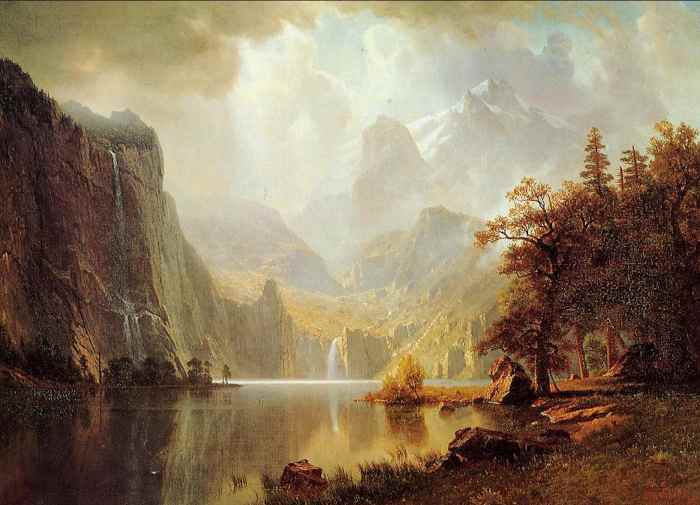 "In the Mountains" Albert Bierstadt 1867
Well, if you want to convey distance, Bierstadt certainly shows us how!
It's already a beautiful scene anyway, but terrifically portrayed and enhanced by his use of aerial perspective - one of its 'tricks' being just this:
Dark tones up front, mid tones in middle distance, light tones furthest away.
What could be simpler than that?!
Of course, there's a lot of artistic skill and experience going on in other ways which make this painting so effective, but those tones used in that way? You can certainly do this too!
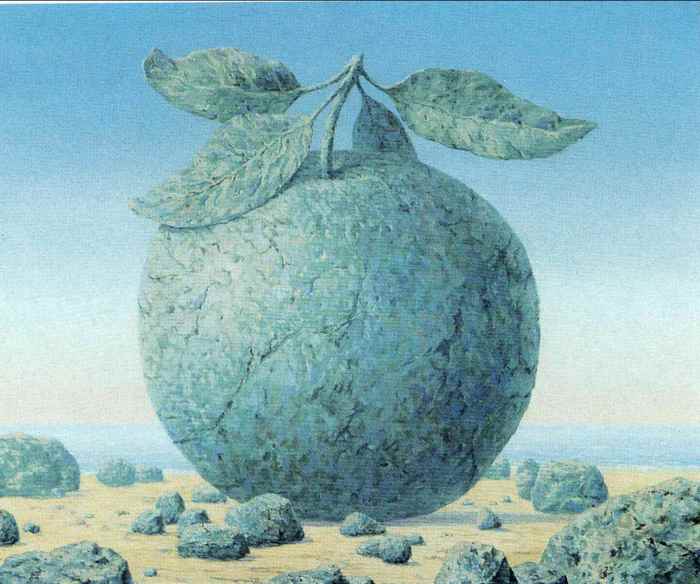 "The Great Table" Rene Magritte 1963
What do Biertadt's mountain scene and this surreal painting by Magritte have in common?
On the face of it, not a lot! But hold on, it's that tone thing again, isn't it?
Remember - dark tones in the foreground, mid tones further away, lightest tones in the distance, and you can't go wrong!
So it doesn't matter what your subject is, that principle still holds and is very effective if depth and distance are what you want to convey.
 "Hunters in the Snow" Pieter Bruegel the Elder c1600
I expect you recognise this painting, a favourite one for Christmas cards!
It all looks very pretty, but in fact that winter marked the onset of a long period of very harsh weather in the Northern Hemisphere, known as 'The Little Ice Age'.
Bruegel uses stark tonal contrasts, darkest tones and brightest color for the foreground trees, birds and figures, bringing them closer to us.
Further away, the slope down to the water-mill and frozen water are painted in more muted tones, distant town and hills being most muted of all.
So his knowledge and deliberate use of tone is largely responsible for the whole panoramic effect of this work.
Create the Illusion of Form
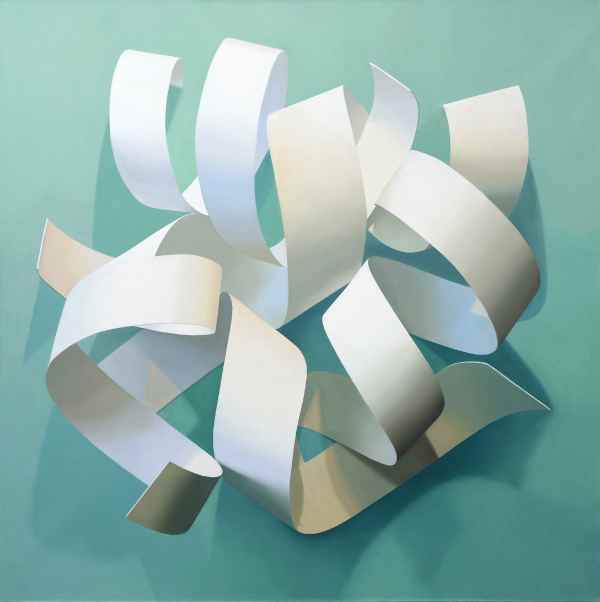 "Storm" Robert McPartland 2007
An imaginative still-life by Robert McPartland - the title perhaps suggesting chaotic movement frozen in a moment of time.
However, there is a sense of balance too in the painting - stillness underlying the chaos.
Beautifully observed, we can even see the thickness of the paper as he describes the curving forms.
He's using delicate color but the subtle changes of tone from light to dark expertly give the illusion of three dimensions.
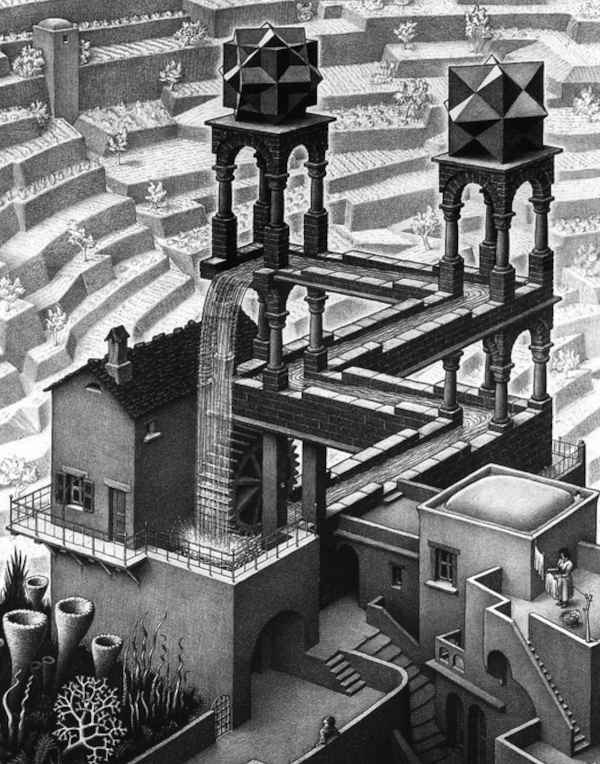 "Waterfall" M.C.Escher 1961
Here's M.C. Escher playing with 3 dimensions - and our minds too, and didn't he love to do that!
Can water really run uphill? With his clever use of perspective, Escher says it can!
The 3-D effect of the architecture again is all done with tone - light to dark, with the darkest tones being furthest away from the light.
 "Study of Drapery of a Seated Figure" Leonardo Da Vinci 1473
So tone is a brilliant tool for making something look 3-dimensional in our artwork.
If you're drawing an object from life, and want to make life easy for yourself, it's always good to have the light source coming from one direction only!
Where was the light source when Da Vinci was working here - over his shoulder and slightly to the left, do you think?
No doubt you've drawn objects from life yourself, carefully looking for variations in tone just as Da Vinci did. Nice to think we're in the company of such a great master, isn't it?
Not much colour, if any, is needed to make us feel we're there with him looking at that drapery. It's almost like a 3-dimensional sculpture but all done with tone on a flat surface - lights, darks and everything in between.

Quick Tip: If you're drawing or painting from life, it's much easier to see tonal variations in your subject if you look at it with half-closed eyes. This trick shows up tones while reducing the impact of colors.
Ready to Try it Out For Yourself?
What is tone in art, you ask? Now you know! There's nothing difficult about it - once you know what you want to say, you have four ways of using tone to help you say it.
By adjusting tones in certain ways we can really show up an important focal point, convey an atmosphere, suggest depth, or make something look three-dimensional. The choice is yours!
You've probably decided which one of the above artist's examples appeals to you the most. Remember, you're not stuck with their subject matter - the different ways of using tone will work just as well with any subject.
So, add the tone element to your tool box, along with any other elements you like to work with, and you'll be amazed at the difference it will make to your art!
Have a go - you can do it!
Robert McPartland's website:
Like this page? Click the icons to share it.